Anxiety as a Continuum
Posted: December 21, 2020
[caption id="attachment_3819" align="aligncenter" width="800"]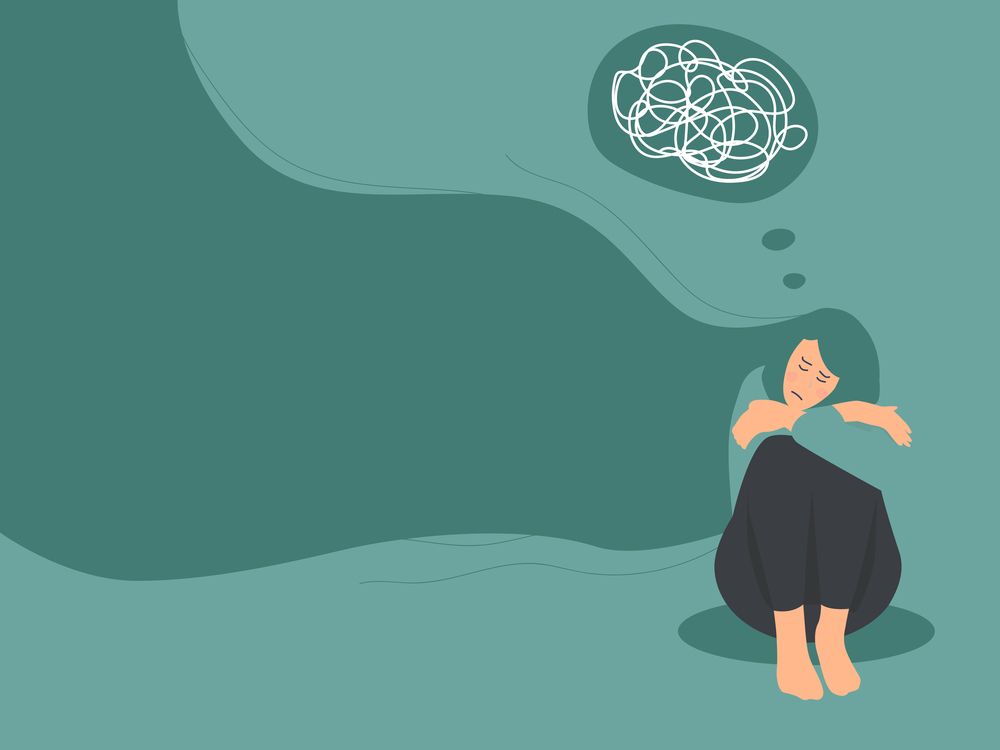 © airtafolo - depositphotos.com[/caption]
As I speak to clients these days, there is one thing almost everyone is needing help with, and that’s managing anxiety. Of course, COVID has put a whole other layer on top of it and we even have a new name for it, “COVID anxiety.”
When you think of yourself of having anxiety as an emotional disorder, it can create an unnecessary label and sense of identity, and traps you in all-or-nothing, polarized thinking.
What I like to remind people of is that there is a whole continuum of feelings. Anxiety is on one end, and we can also explore other stops along that continuum. What does anxiety feel like to you? What about worry? Overwhelm? Discomfort? Stress? It can be oddly comforting to recognize that even though you’re feeling quite worried, it’s not full-blown anxiety.
We all have genuine reasons to be worried right now. We’re worried about spreading or contracting the virus, and we feel the same fears for our loved ones. We’re worried about what to do and not do to keep us all safe, particularly in the midst of the holiday season.
Most people know when they’re struggling with some level of anxiety, but they may not always know it’s treatable. In fact, there are a multitude of treatment interventions a therapist can use, as well as tools and skills you can learn and apply yourself.
After all, while therapy happens in the live counseling session, there is so much more to it. Learning tools and skills and then practicing them in between sessions are where the benefits are plentiful. Start with these:
1. Breathing techniques for anxiety
Here is one breathing exercise I recommend to my clients:
© airtafolo - depositphotos.com[/caption]
As I speak to clients these days, there is one thing almost everyone is needing help with, and that’s managing anxiety. Of course, COVID has put a whole other layer on top of it and we even have a new name for it, “COVID anxiety.”
When you think of yourself of having anxiety as an emotional disorder, it can create an unnecessary label and sense of identity, and traps you in all-or-nothing, polarized thinking.
What I like to remind people of is that there is a whole continuum of feelings. Anxiety is on one end, and we can also explore other stops along that continuum. What does anxiety feel like to you? What about worry? Overwhelm? Discomfort? Stress? It can be oddly comforting to recognize that even though you’re feeling quite worried, it’s not full-blown anxiety.
We all have genuine reasons to be worried right now. We’re worried about spreading or contracting the virus, and we feel the same fears for our loved ones. We’re worried about what to do and not do to keep us all safe, particularly in the midst of the holiday season.
Most people know when they’re struggling with some level of anxiety, but they may not always know it’s treatable. In fact, there are a multitude of treatment interventions a therapist can use, as well as tools and skills you can learn and apply yourself.
After all, while therapy happens in the live counseling session, there is so much more to it. Learning tools and skills and then practicing them in between sessions are where the benefits are plentiful. Start with these:
1. Breathing techniques for anxiety
Here is one breathing exercise I recommend to my clients:
- Inhale through the nose, trying to expand the abdomen, sending the air and then up into the lungs.
- Hold the breath just briefly.
- Exhale slowly, not the point where it’s uncomfortable, just a gentle and slow exhale.
- Put some space in between your breaths as a way to stay calm and avoid hyperventilating.
- Contact me - I can teach you these techniques in as few as 1-3 sessions
- Message me in between sessions about how you are using these new skills
- Contact another therapist or yoga teacher (many are doing online sessions now)
- Journal
- Use worksheets and workbooks (ask me for a recommendation)
- Reach out to your understanding support system (friends, peers, family) (Discord is one tool that can help)
- Attend an online class or webinar
- Listen to podcasts (https://brenebrown.com/podcast/introducing-unlocking-us/ or http://www.self-compassion.org) or audio downloads (The Anxiety and Phobia Workbook - to access, sign up for a free account and then register this book to your account)
- Explore meditation apps like Insight Timer (Jennifer Piercy has some excellent guided meditations for better sleep), Calm, Headspace, and My Life)